The Human Granzyme B (GZMB) ELISA Kit is a powerful and precise assay used to detect and quantify Granzyme B, a serine protease crucial for cytotoxic immune responses, in biological samples such as serum, plasma, and cell culture supernatants. This kit is widely utilized in immunology and cancer research, where Granzyme B is studied for its role in immune regulation, cancer progression, and therapy response. This article provides an in-depth overview of the kit, its applications, and its significance in research and diagnostics.
What is Granzyme B (GZMB)?
Granzyme B is a serine protease primarily expressed by cytotoxic T lymphocytes (CTLs) and natural killer (NK) cells. It plays a critical role in inducing apoptosis in infected or malignant cells by cleaving target proteins in the cytoplasm. Granzyme B is also involved in immune homeostasis and inflammatory responses.
- For more details about Granzyme B’s structure and function, visit PubMed or the National Center for Biotechnology Information (NCBI).

Clinical Significance of Granzyme B
1. Cancer Immunotherapy
Granzyme B is central to immune-mediated tumor killing. Its levels are often studied in patients undergoing checkpoint inhibitor therapy or CAR-T cell therapy. Learn more from the National Cancer Institute (NCI).
2. Autoimmune Diseases
Elevated Granzyme B levels are associated with autoimmune disorders such as rheumatoid arthritis and lupus. For more information, visit the National Institute of Allergy and Infectious Diseases (NIAID).
3. Infectious Diseases
Granzyme B is a key player in the immune response to viral infections, such as HIV and COVID-19. Explore related research at ClinicalTrials.gov.
4. Inflammatory Disorders
Granzyme B is implicated in chronic inflammation and tissue damage in diseases like atherosclerosis and chronic obstructive pulmonary disease (COPD). The American Heart Association and National Heart, Lung, and Blood Institute (NHLBI) provide detailed resources.
Applications of the Human Granzyme B ELISA Kit
1. Cancer Research
The kit enables researchers to study the immune system’s role in targeting cancer cells. Granzyme B is a key biomarker in immunotherapy studies, as highlighted by AACR.
2. Immune Response Studies
Granzyme B is a hallmark of cytotoxic activity in T cells and NK cells. Researchers use this kit to measure immune activation during infections, autoimmune diseases, and immunotherapy. Learn more from the NIH Immune Tolerance Network.
3. Drug Development
The kit is essential for evaluating the efficacy of immunomodulatory drugs that influence CTL and NK cell activity. Details about drug testing and validation are available at FDA Drug Approval.
4. Translational Research
It bridges basic and clinical research, aiding in the development of personalized medicine strategies. Visit NIH Translational Research Resources for more information.
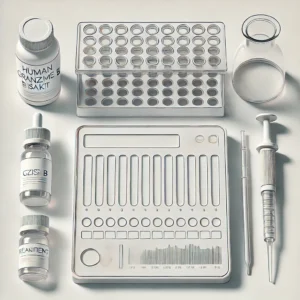
Features of the Human Granzyme B ELISA Kit
- High Sensitivity and Specificity: Designed to detect low concentrations of Granzyme B with minimal cross-reactivity.
- Wide Dynamic Range: Covers a broad range of Granzyme B levels to suit various experimental needs.
- Easy-to-Use Protocol: Includes pre-coated plates, ready-to-use reagents, and straightforward instructions for researchers at all levels.
- Compatible with Multiple Sample Types: Validated for serum, plasma, and cell culture supernatants.
- Quantitative Results: Provides precise measurements with reproducible results across replicates.
How the Human Granzyme B ELISA Kit Works
The enzyme-linked immunosorbent assay (ELISA) is a plate-based method that uses antigen-antibody interactions to detect specific proteins. The key steps in the Granzyme B ELISA are:
- Coating: Microplates are pre-coated with an antibody specific to Granzyme B.
- Sample Addition: Samples containing Granzyme B are added to the plate.
- Binding: Granzyme B binds to the capture antibody.
- Detection: A biotin-conjugated detection antibody and enzyme-linked streptavidin amplify the signal.
- Signal Development: A substrate reacts with the enzyme to produce a measurable color change proportional to the Granzyme B concentration.
For technical details, refer to the NIH Assay Guidance Manual.
Advantages of the Human Granzyme B ELISA Kit
- High Throughput: Allows for the simultaneous analysis of multiple samples.
- Time-Efficient: The assay is completed in 2-3 hours, enabling rapid data acquisition.
- Reproducibility: Provides consistent and reliable results across experiments.
- Cost-Effective: Offers a robust and affordable alternative to advanced methods like flow cytometry and mass spectrometry.

Challenges and Future Directions
1. Cross-Reactivity
While the kit is highly specific, potential cross-reactivity with related proteins could occur. For guidance on minimizing assay variability, consult NIST ELISA Standards.
2. Emerging Technologies
New techniques like multiplex assays and proteomics are being developed to complement ELISA. Learn more at NIH Proteomics Resources.
3. Clinical Applications
Expanding the use of Granzyme B as a diagnostic and prognostic marker in clinical settings is a major area of research. Explore current clinical trials at ClinicalTrials.gov.
Conclusion
The Human Granzyme B ELISA Kit is a cornerstone of immunology and cancer research, enabling precise measurement of Granzyme B levels in diverse biological samples. Its applications span cancer immunotherapy, infectious diseases, and autoimmune research, making it an indispensable tool for advancing our understanding of immune responses.
For further information, visit:
- Harvard Medical School Immunology Department
- Mayo Clinic Research Labs
- Johns Hopkins University Immunology Program