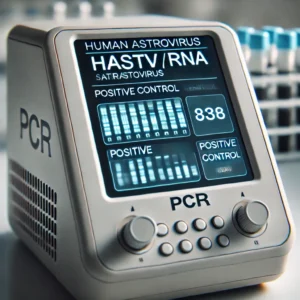
Human Astrovirus (HAstV) is a single-stranded RNA virus and a significant cause of gastroenteritis, particularly in young children, the elderly, and immunocompromised individuals. Detecting HAstV is essential for effective disease control, as astrovirus infections can lead to severe outbreaks in healthcare facilities and among vulnerable populations. The use of PCR Qualitative Positive Control for HAstV RNA is crucial for ensuring accurate diagnostic results.

Overview of HAstV and Its Public Health Implications
Human astroviruses are small, non-enveloped viruses with eight serotypes. They primarily infect the gastrointestinal tract, leading to diarrhea, nausea, and abdominal pain. According to the Centers for Disease Control and Prevention (CDC) and the World Health Organization (WHO), HAstV infections are often underreported, with many cases mistaken for other viral causes of gastroenteritis. Ensuring accurate HAstV detection through quality control in PCR diagnostics is critical in preventing the spread and ensuring public health.
PCR Testing and the Role of Positive Controls
PCR testing for HAstV RNA requires high specificity and sensitivity to detect even low viral loads. A qualitative positive control for HAstV RNA ensures that PCR assays produce reliable results by confirming the presence or absence of viral RNA. Laboratories follow stringent guidelines from institutions like the National Institutes of Health (NIH) and the Food and Drug Administration (FDA) to validate the accuracy of PCR assays with positive controls, preventing false negatives that could impact diagnosis.

Importance of Quality Control in HAstV Detection
Implementing qualitative positive controls in PCR diagnostics helps standardize the detection process across labs, improving test consistency. Positive control samples are prepared to mimic clinical samples containing known quantities of HAstV RNA. These controls are essential in quality assurance and regulatory compliance, especially under guidelines from the Clinical and Laboratory Standards Institute (CLSI) and the European Centre for Disease Prevention and Control (ECDC).
Molecular Characteristics and Assay Validation
Astroviruses possess distinct molecular markers that aid in their detection through PCR. According to the National Center for Biotechnology Information (NCBI), HAstV RNA has conserved regions suitable for developing PCR primers. Validating these primers with positive controls is a critical step in assay design, enabling labs to follow protocols recommended by regulatory bodies such as the Environmental Protection Agency (EPA).
Applications in Epidemiology and Outbreak Prevention
PCR assays with positive controls play a vital role in tracking HAstV infections in outbreak situations, allowing public health officials to swiftly identify and contain sources of infection. For instance, public health labs under the Department of Health and Human Services (HHS) monitor astrovirus infections to assess and control regional outbreaks, especially in high-risk settings like nursing homes and daycares.
Regulatory Compliance and Best Practices
Compliance with regulatory standards for PCR diagnostics is essential to ensure the reliability of HAstV RNA detection. Laboratories must adhere to strict protocols set by the United States Department of Agriculture (USDA) and the Federal Drug Administration (FDA) for the proper use of qualitative positive controls. The CDC also offers comprehensive guidelines to ensure that HAstV diagnostics are performed according to best practices, minimizing diagnostic errors and improving public health outcomes.
Conclusion
The use of Human Astrovirus (HAstV) RNA PCR Qualitative Positive Controls is vital for accurate diagnosis and outbreak prevention. By ensuring the reliability and sensitivity of PCR assays, healthcare providers and labs contribute to effective disease surveillance and management, ultimately supporting public health efforts globally. For more information on HAstV and PCR quality control, resources from GARD and NIST provide additional insights into best practices and the latest diagnostic advances.