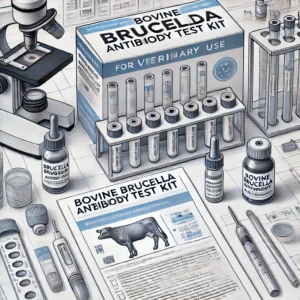
The Bovine Brucella Antibody Rapid Test Kit is a critical diagnostic tool designed to detect antibodies against Brucella species in cattle. This portable and easy-to-use kit provides rapid and reliable results, aiding in the control and prevention of brucellosis, a zoonotic disease with significant implications for livestock and human health. The early detection of infected animals is pivotal for managing outbreaks and mitigating economic losses in the livestock industry.
The Importance of Detecting Brucellosis in Cattle
Brucellosis, caused by bacteria of the genus Brucella, is a highly contagious disease affecting cattle, goats, sheep, and other livestock. Infected animals often experience reduced fertility, abortions, and decreased milk production, leading to severe economic consequences for farmers and agricultural industries. Moreover, humans can contract brucellosis through direct contact with infected animals or consumption of contaminated dairy products, emphasizing the need for robust surveillance tools. Learn more about brucellosis and its public health implications at the CDC and USDA websites.
Features of the Rapid Test Kit
The Bovine Brucella Antibody Rapid Test Kit offers several advantages:
- Ease of Use: The kit requires minimal training to perform and interpret results, making it ideal for on-site testing.
- Speed: Results are typically available within 15–20 minutes, allowing for rapid decision-making.
- Accuracy: The test uses high-specificity antigens to detect Brucella-specific antibodies, ensuring reliable results.
- Portability: Designed for field use, the kit enables testing in remote or resource-limited areas.
More about field-testing strategies can be explored at the FAO and WHO websites.

How the Test Works
The Bovine Brucella Antibody Rapid Test Kit utilizes lateral flow immunochromatography to detect antibodies. A blood, serum, or plasma sample is placed on the test strip. If Brucella-specific antibodies are present, they bind to antigens on the strip, producing a visible line. Detailed technical guidelines on serological testing are available through National Animal Health Laboratory Network (NAHLN) and Animal and Plant Health Inspection Service (APHIS).
Benefits for Disease Control Programs
Using rapid test kits as part of brucellosis control programs can:
- Identify and isolate infected animals, preventing further transmission.
- Support vaccination campaigns by ensuring disease-free herds.
- Aid in international trade compliance by certifying animals as brucellosis-free.
The economic and public health benefits of controlling brucellosis are extensively documented in studies by PubMed and NIH.
Regulatory Framework and Guidelines
The test kit aligns with international standards for disease control, as outlined by the World Organization for Animal Health (OIE). In the United States, the USDA’s Veterinary Services provides specific protocols for brucellosis testing and eradication.
Globally, organizations such as the European Food Safety Authority (EFSA) and the Centers for Disease Control and Prevention (CDC) emphasize the importance of accurate diagnostics in managing zoonotic diseases.

Where to Access Bovine Brucella Antibody Rapid Test Kits
These kits are available through veterinary diagnostic suppliers and government health agencies. For purchasing information and guidance, consult the USDA or your local agricultural extension office.
Research and Advancements
Ongoing research into improving brucellosis diagnostics is supported by institutions such as NIH, FAO, and USDA Agricultural Research Service. Advancements aim to enhance test sensitivity and develop cost-effective solutions for large-scale testing programs.
Conclusion
The Bovine Brucella Antibody Rapid Test Kit is an indispensable tool in the fight against brucellosis. By providing rapid and accurate results, it empowers veterinarians and farmers to make informed decisions, safeguarding animal and public health. For further details, explore educational resources on brucellosis at CDC, NIH, and OIE.
If you need additional information or purchasing details, feel free to contact your local veterinary health authority or visit relevant government sites like the USDA or FAO