RNA sequencing (RNA-Seq) has become a cornerstone in plant molecular biology, enabling researchers to investigate gene expression, transcriptome profiles, and novel RNA species. The Ribo-off rRNA Depletion Kit (Plant) is designed to remove ribosomal RNA (rRNA), which typically constitutes the majority of total RNA, thereby maximizing sequencing efficiency and depth for meaningful analysis.
Importance of rRNA Depletion in Plant Studies
Ribosomal RNA represents up to 80-90% of total RNA in a sample, and its presence can obscure the detection of mRNAs and other non-coding RNAs in RNA-Seq data. For plant researchers, this issue is particularly pronounced due to the unique challenges posed by plant RNA, such as polyphenolic compounds and secondary metabolites. Efficient rRNA depletion is crucial to enrich for low-abundance transcripts and improve the accuracy of downstream analyses.
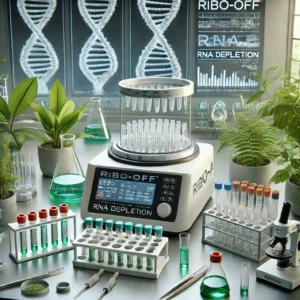
Features of the Ribo-off rRNA Depletion Kit (Plant)
The Ribo-off rRNA Depletion Kit is optimized for plant samples, addressing the specific needs of plant RNA extraction and processing:
- High Specificity: Targets and removes 18S, 28S, 5.8S, and 5S rRNA from diverse plant species.
- Broad Compatibility: Works effectively with RNA extracted from leaves, roots, seeds, and other plant tissues.
- Efficiency and Speed: Provides consistent rRNA removal in less than two hours, suitable for high-throughput studies.
- Compatible with RNA-Seq: Ideal for mRNA and lncRNA sequencing, enabling deeper and more informative transcriptome coverage.
Applications in Plant Research
The Ribo-off kit is instrumental in various plant molecular biology applications, including:
- Transcriptome Profiling: Identify gene expression patterns under biotic or abiotic stress conditions. Learn more about transcriptomics from the National Center for Biotechnology Information (NCBI).
- RNA Modifications: Investigate RNA modifications and editing events. Reference details on RNA biology from the National Institutes of Health (NIH).
- Novel RNA Discovery: Detect long non-coding RNAs (lncRNAs) or small RNAs with enhanced resolution. Explore small RNA resources at USDA Agricultural Research Service.
- Gene Regulation Studies: Analyze regulatory networks by enriching mRNAs and microRNAs. Discover regulatory insights at DOE Joint Genome Institute.

Workflow Overview
The kit includes streamlined steps to ensure minimal RNA loss:
- RNA Preparation: Extract total RNA using plant-specific protocols (USDA Plant Resources).
- rRNA Depletion: Incubate with the proprietary rRNA removal solution, which hybridizes specifically with rRNA molecules (DOE BioEnergy Research Centers).
- Clean-Up: Purify RNA using spin columns or ethanol precipitation for downstream library preparation (NIH Genomics Core).
Advantages Over Generic Kits
- Tailored for Plant RNA: Unlike generic kits, the Ribo-off kit addresses plant-specific contaminants that interfere with rRNA depletion (NCBI Plant Genomics).
- Improved Yield: Higher retention of non-rRNA species compared to other methods (NSF Plant Genome Research Program).
- Cost-Effective: Reduces sequencing costs by eliminating unnecessary rRNA reads (DOE Office of Science).
Case Studies and Research Impact
Several studies have demonstrated the effectiveness of plant rRNA depletion:
- A study on maize drought tolerance showed improved transcriptome profiling after rRNA depletion (USDA Drought Research).
- Rice genomic studies highlighted the enrichment of lncRNAs, critical for developmental regulation (IRRI Rice Knowledge Bank).
- Soybean RNA-Seq experiments achieved higher resolution in gene expression analysis under nitrogen stress (SoyBase Plant Genome Database).
Conclusion
The Ribo-off rRNA Depletion Kit (Plant) is an invaluable tool for plant researchers aiming to maximize the potential of RNA-Seq technologies. By removing rRNA efficiently and preserving valuable RNA molecules, this kit ensures higher data quality and cost-efficiency, driving insights into plant biology and genomics.
For further information and protocols, explore resources like NCBI RNA-Seq, DOE Plant Research, and NIH RNA Biology.