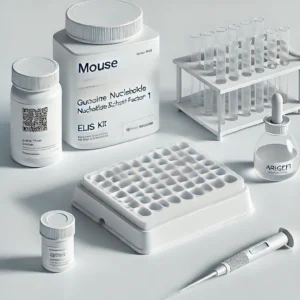
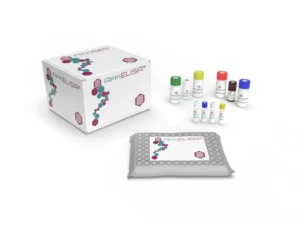
The Mouse Rho Guanine Nucleotide Exchange Factor 1 (ARHGEF1) ELISA Kit is a high-sensitivity immunoassay designed to quantify ARHGEF1 protein levels in mouse samples. This kit is invaluable for studying cellular signaling pathways, cytoskeletal dynamics, and diseases linked to Rho GTPase signaling.
What is ARHGEF1?
ARHGEF1 (Rho Guanine Nucleotide Exchange Factor 1) is a key regulator in the Rho family GTPase signaling pathway. It catalyzes the exchange of GDP for GTP, activating Rho proteins, which are critical for cellular processes like actin cytoskeleton organization, cell migration, and intracellular signaling. Learn more about Rho GTPases and ARHGEF1 at NCBI and NIH.
Key Features of the ARHGEF1 ELISA Kit
- High Sensitivity and Specificity
The kit can detect low concentrations of ARHGEF1 in various biological samples, including serum, plasma, and cell lysates. Explore sensitivity metrics in immunoassays at CDC Laboratory Standards. - Wide Dynamic Range
Quantifies ARHGEF1 over a broad concentration range, making it suitable for diverse experimental needs. Learn about assay range optimization at FDA Science and Research. - Rapid and Reliable
The streamlined protocol ensures reproducible results with minimal hands-on time. Review ELISA protocol guidelines at NIH Reproducibility Resources.
Applications of the Mouse ARHGEF1 ELISA
- Cell Biology Research
Investigate the role of ARHGEF1 in actin cytoskeleton remodeling and cell motility. For foundational studies on the cytoskeleton, visit PubMed Central. - Cancer Research
Dysregulation of ARHGEF1 is linked to tumor progression and metastasis in cancers such as breast and colorectal cancer. Explore cancer biology at NCI. - Neurobiology
ARHGEF1 contributes to axonal guidance and synaptic plasticity, making it a key protein in neurodevelopment and neurodegenerative diseases. Learn about neurobiology studies at NIH Neuroscience Resources. - Immunology
The protein plays a role in lymphocyte migration and immune response regulation. Discover immune cell dynamics at CDC Immunology.
Advantages of the ARHGEF1 ELISA Kit
- Accurate Quantification
High specificity for ARHGEF1 ensures minimal cross-reactivity with related proteins. Review antibody specificity at NIST Biomarker Validation. - Versatile Sample Compatibility
Works with various biological matrices, including tissue homogenates and cell culture supernatants. Learn about sample preparation at FDA Laboratory Methods. - Cost-Effective
The kit reduces costs by offering a high-throughput solution for multiple samples. Explore assay cost management at NSF Resources. - Enhanced Reproducibility
Rigorously tested for inter- and intra-assay consistency. Review reproducibility standards at NIH Rigor and Reproducibility.
Protocol Overview
- Sample Preparation
Collect and prepare biological samples according to standard guidelines. Refer to CDC Biospecimen Collection. - ELISA Setup
Add standards, samples, and controls to the 96-well plate, followed by the detection antibody. For step-by-step instructions, see FDA ELISA Guidelines. - Incubation and Washing
Incubate the plate to allow antigen-antibody binding and wash away unbound substances. Learn about washing techniques at NIH Laboratory Techniques. - Signal Detection
Add the substrate solution and measure absorbance using a microplate reader. Explore microplate reader calibration at FDA Laboratory Resources.
Comparative Performance
The Mouse ARHGEF1 ELISA Kit offers improved sensitivity and specificity compared to traditional methods like Western blotting. Comparative studies on ELISA technology can be found at PubMed.
Role of ARHGEF1 in Disease
- Cancer Metastasis
ARHGEF1 is implicated in regulating metastasis through Rho GTPase signaling. Explore cancer metastasis pathways at NCI. - Neurodegenerative Disorders
Aberrant ARHGEF1 activity is linked to conditions like Alzheimer’s and Parkinson’s diseases. Learn more about neurodegeneration research at NIH Neuroscience. - Autoimmune Diseases
Dysregulation of ARHGEF1 affects immune cell migration, contributing to autoimmune disorders. Discover autoimmune disease mechanisms at CDC Autoimmune Research.
Conclusion
The Mouse Rho Guanine Nucleotide Exchange Factor 1 (ARHGEF1) ELISA Kit is a powerful tool for quantifying ARHGEF1 in biological samples. Its high sensitivity, specificity, and ease of use make it indispensable for studying cellular signaling, cancer biology, and neurodegenerative disorders.
For additional resources, consult trusted platforms like NIH, CDC, and FDA.